White Quilt Patterns and Ideas
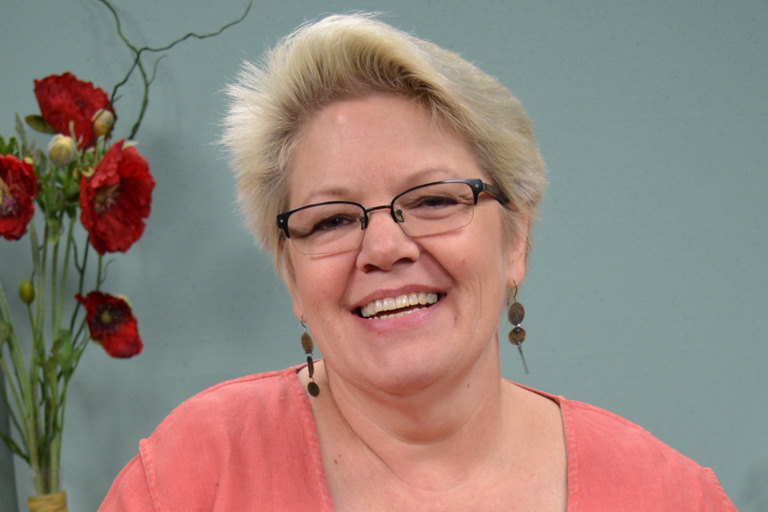
Heather ThomasHeather Thomas takes a different approach to her quilt by deciding what fabric to use for a quilt by texture instead of color. She shows you numerous examples of different white and off white pieces that really avoid color and display a plethora of different textures.
Color is often the driving force in a quilt design. And when we begin choosing the fabrics or products that we're going to use for a quilt we often lead with those color choices, but sometimes it can be a lot of fun to lead with texture instead. And not just the visual texture, the ideas that are printed on the surface of a fabric, but actual, tactile texture. The things that you can actually feel. This piece is created mostly in white, white and subtle off whites, creams.
And so it's the texture of the fabrics and the techniques that are used that really drive the piece and give it its beauty. When you start thinking of choosing fabrics built on texture rather than on color, you're going to have to work with fabrics that are different from the normal quilting fabrics. Normally we use that regular cotton that has a very soft touch to it, and really nothing on the surface. When you work with something like white or creams, where there's not a lot of color to add all kinds of interest, then you need things that are going to be a little bit more interesting in other ways. So I collect fabrics that are fun to touch, and that's what we've got going on here.
When we work with something with such a simple palette, then we have to raise the surface to draw attention to everything. And you want to have things that have multiple layers and multiple different types of textures. So here on this small quilt I've done a technique that's just called lay in place. So everything's laid on the surface. There's really no actual piecing.
And then everything's quilted after that to a base. The base is made out of canvas, so it's a pretty heavy piece of fabric. And then the batting is exposed, and the batting is actually just a white felt. Then I have several different types of fabrics. The main fabric, or the one that's taking up the most amount of space, is here and it ends with this wonderful bit of tatting and embroidery, and it's a vintage hanky.
And though this isn't a very vintage looking piece. It's a more modern looking piece that vintage hanky is fitting in just fine. I also have some silk, and that's where I bring in just a little tiny bit of color. This wonderful pale mossy green of the leaf is just enough to add that little spark of interest. So the silk has embroidery on it.
Then I also have linen, two different types. One is a linen cotton blend and one is just 100% linen. And I bring the canvas back in also. This here is just buckram and it's just a really, really heavy, dense fabric that has a really open weave. And you can pull the fibers out and get this wonderful eyelash effect.
And then we have over here pin dot cotton. So it's really the only cotton that we have in the whole piece, but it's all working together because it has really interesting textures. So when you look at the piece it's the texture that draws you in first. I added more texture by quilting it. So here we have this wonderful all over leaf pattern and it's in the simplest of the fabrics.
So I heightened the texture there because the fabric didn't have a lot of texture on its own. Everywhere else the texture is pretty simple when it comes to the quilting, just some gentle curves in places, some curvy lines here and here, and then in the background the straightest line, so that we have a nice contradiction to the curvy lines that are in the leaf. Now, when you go shopping you want to look for particular types of fabrics. Definitely include also some embellishments. You can see here on the edge of the quilt that I've couched a rat tail around the edge.
So I've got rat white rat tail. I found some white rickrack, I didn't end up using it, but that would have been a great texture too. So here we have some canvas. This is just regular artist's canvas. You can pick it up at hobby stores and some fabric stores carry it.
And the buckram, the buckram is like $0.99 a yard. And almost all of the hobby stores like Joanne's, that sort of thing, carry this type of a fabric. These are both linens. This was 100% linen and this is a cotton linen blend. And they have a wonderful weave that that gives great texture too.
And here's that beautiful silk. So it's got a nice creamy background with the embroidery on it. And that's what giving us that great little pop of color in the quilt. This is a really nice linen, because it's got a type of weave in it that's called a jacquard, so it has different textures in it itself. So you can choose different areas to add more interest also.
And here's a couple of great vintage hankies, and they have wonderful tatting on them and on them and embroidery on them. This is one of my favorite fabrics. It's called monk's cloth, and it's very similar to cheesecloth, but it's got a much tighter weave and you can crumple it up and do all sorts of really fun things with it. This is a cotton velveteen and it has a lot of really great texture, too. It's very heavy and thick and it really raises the surface a lot.
And this last piece here is an embroidered cotton. So it has these wonderful big flowers embroidered on it. And it has, it looks beautiful cut up and beautiful whole. Either way it's going to give you some great texture. So I hope that you'll give this a shot and think about adding textural fabrics to your stash, not just wonderful quilting fabrics, and think about working color free.
See what you can do to really raise the surface and make something beautiful.

Share tips, start a discussion or ask other students a question. If you have a question for an expert, please click here.
Already a member?
No Responses to “White Quilt Patterns and Ideas”